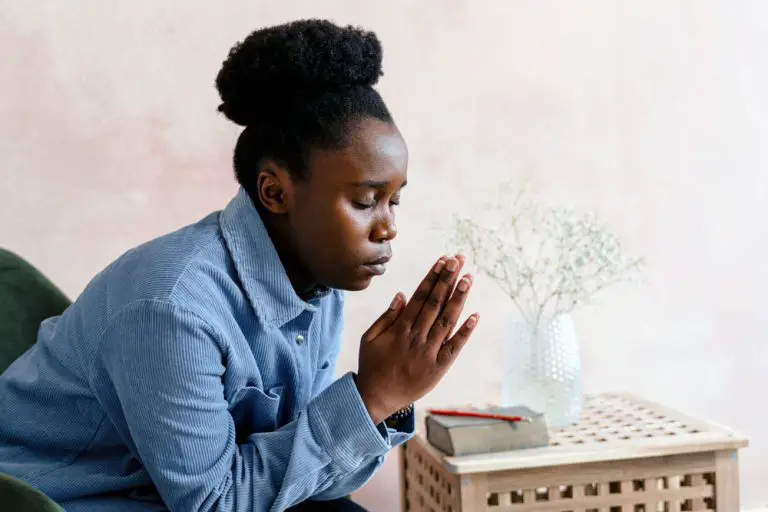
A while back, a friend told me something honest. “I can’t pray for more than 10 minutes,” he said. “I pray for my family, my job, and my health. Then I check the clock. Eight minutes have passed. I’ve run out of things to say.”
I get it. I’ve been there too.
Most of us start prayer with good intentions. Then our knees begin to ache. Our minds wander. We wonder how much time is left.
Here is what struck me, though. Many of us can watch a movie or their favorite series on Netflix for three hours without blinking. We say “just one more episode,” and the afternoon disappears. We pick up our phones and lose an hour to scrolling.
Nobody has to coach us. We just stay.
So the problem is not that we can’t focus for long stretches. We do it every week. We just haven’t trained ourselves to do it with God.
That is why I’m writing about praying for long hours. I’m talking about three, five, even seven hours in prayer. In this post, I’ll share the real benefits of long prayer. Then I’ll show you how to build up to it without burning out, falling asleep, or getting bored.
You don’t need any experience. You just need a willing heart.
Key Takeaways
- Praying for long hours is a skill. You can train for it, like a muscle.
- Long prayer helps you deal with doubt, think clearly, and receive direction.
- It makes you more sensitive to the Holy Spirit.
- It turns prayer from a duty into a delight.
- You don’t have to talk the whole time. Worship, Scripture reading, and silence all count.
- Start small. Then add a few minutes each week.
- Distractions are normal. Gently return your focus each time.
What Does Praying for Long Hours Really Mean?
Let me clear up a common myth first.
Praying for long hours does not mean talking nonstop for three hours or more. That’s why so many people quit. They run out of words after 10 minutes and assume they’ve failed.
But long prayer is not about word count. It is about dwelling in God’s presence. It means staying with him long enough and stop rushing.
Think of it like time with a close friend. You don’t script every minute. You talk. You listen. You sit in comfortable silence.
Your prayer time can include:
- Thanksgiving and worship.
- Reading Scripture.
- Making requests.
- Praying for other people.
- Praying in the Spirit.
- Quiet listening.
Once you see it this way, long prayer feels doable. It even feels inviting.
Benefit 1: Praying for Long Hours Deals with Doubt
Let’s start with the benefit that changed me most.
In Matthew 17, the disciples tried to cast a demon out of a boy. They failed. They came to Jesus privately and asked why. He answered:
“20Because of your unbelief: for verily I say unto you, If ye have faith as a grain of mustard seed, ye shall say unto this mountain, Remove hence to yonder place; and it shall remove; and nothing shall be impossible unto you. 21Howbeit this kind goeth not out but by prayer and fasting.” (Matthew 17:20-21, KJV)
Notice the link. The problem was unbelief. The remedy was prayer and fasting.
That is whylong prayer and fasting have gone together for centuries. Both are ways of seeking God for a sustained time.
Here’s what I’ve noticed about short prayers. I say what I need. I hope God heard me. Then I walk away still unsure. The doubt is still sitting there.
But something shifts when I stay longer. Somewhere around the second or third hour, my questions get quieter. I stop hoping and start knowing.
I call this “praying until there is a knowing.”
It is not a feeling I work up. It is an assurance that settles on me. I leave the room as the same person with the same problem. But I’m no longer arguing with myself about whether God will come through.
That is one of the greatest benefits of long prayer. Your situation may not change right away. Your confidence does.
Benefit 2: Praying for Long Hours Clears Your Mind
Are you facing too many choices right now?
Which job? Which city? Which person? Should you start the business or stay put? Your mind is crowded. Every option sounds reasonable on a different day.
Jesus faced a big decision too. Luke records it:
“12And it came to pass in those days, that he went out into a mountain to pray, and continued all night in prayer to God. 13And when it was day, he called unto him his disciples: and of them he chose twelve, whom also he named apostles.” (Luke 6:12-13, KJV)
Think about that. Jesus had many followers. He had to choose only twelve. One of the apostles would later betray him.
That was a heavy decision. And he didn’t make it between meetings. He spent the whole night with the Father first.
I love this picture of what long prayer does. Imagine a bottle of muddy water. If you keep shaking it, it stays cloudy. If you set it down and leave it still, the mud sinks. Soon you can see through it.
Prayer works the same way.
In the first hour, all my worries bubble up. My mind jumps everywhere. But if I stay, the clutter settles. What looked like five equal options becomes one clear path.
That is the power of praying for long hours. It sorts the noise.
Benefit 3: Praying for Long Hours Opens You to Inspiration and Revelation
Have you ever wished you could understand the Bible more deeply? Or know exactly what to do next?
Long prayer helps with both. Job 32:8 says:
“But there is a spirit in man: and the inspiration of the Almighty giveth them understanding.” – KJV
Understanding doesn’t come only from age, education, or experience. It also comes from God’s inspiration. And inspiration tends to find people who stay in His presence long enough to receive it.
Look at the sons of Issachar:
“And of the children of Issachar, which were men that had understanding of the times, to know what Israel ought to do.” (1 Chronicles 12:32a, KJV)
They did more than know what was happening. They knew what to do about it.
That’s what many of us need today. We watch the news. We know what’s going on in our lives. But do we know what God is saying about it?
When I’m praying for long hours, I start to receive revelation. Ideas. Strategies. Solutions. Warnings. Direction I couldn’t have produced on my own.
Some of my best ideas didn’t come at my desk. They came on my knees, hours into prayer, when I wasn’t even asking for them.
Long prayer opens a door. Inspiration walks through it.
Benefit 4: Praying for Long Hours Makes You Sensitive in the Spirit
Have you ever missed God’s voice because life was too loud?
Elijah once stood on a mountain. A great wind came. Then an earthquake. Then a fire. But God was in none of them.
“And after the earthquake a fire; but the LORD was not in the fire: and after the fire a still small voice.” (1 Kings 19:12, KJV)
You can’t hear a still, small voice while in a hurry. You have to slow down and stay.
The longer I stay in prayer, the more my spiritual senses wake up. I begin to notice things I would have missed:
- An urge to call a certain person.
- A check in my spirit about a decision.
- A Bible verse that suddenly comes alive.
- A name that rises in my heart.
Acts 13:2 shows the same pattern in the early church:
“As they ministered to the Lord, and fasted, the Holy Ghost said, Separate me Barnabas and Saul for the work whereunto I have called them.” – KJV
Notice what they were doing. They were ministering to the Lord. They were simply spending time with him. In that atmosphere, the Holy Spirit spoke clearly.
That is the sensitivity long prayer builds. You become someone who catches what God is saying.
Benefit 5: Praying for Long Hours Turns Duty into Delight
This benefit surprises people most.
At first, long prayer feels like hard work. Your knees hurt. Your mind wanders. You check the time.
I won’t pretend otherwise.
But if you keep at it, you reach a breakthrough. Prayer stops being a duty. It becomes a delight.
David wrote:
“One thing have I desired of the LORD, that will I seek after; that I may dwell in the house of the LORD all the days of my life, to behold the beauty of the LORD, and to enquire in his temple.” (Psalm 27:4, KJV)
And he added:
“Thou wilt shew me the path of life: in thy presence is fulness of joy; at thy right hand there are pleasures for evermore.” (Psalm 16:11, KJV)
Will you still get distracted? Yes. That never fully goes away.
But here is what changes. It gets easier to come back.
In the beginning, one distraction can end your whole prayer time. Later, you notice your mind has drifted. You smile. You turn back to God in a moment. Your heart finds its way home.
Power Belongs to Those Who Stay
Scripture ties dwelling in God’s presence to strength.
“He that dwelleth in the secret place of the most High shall abide under the shadow of the Almighty.” (Psalm 91:1, KJV)
Notice the word dwelleth. It doesn’t say “he that visits.” It doesn’t say “he that stops by.” It says he that dwells.
Before Pentecost, Jesus gave his disciples a clear instruction:
“But tarry ye in the city of Jerusalem, until ye be endued with power from on high.” (Luke 24:49b, KJV)
They tarried. They waited. They stayed and prayed for days in the upper room before the fire fell.
Isaiah says the same:
“But they that wait upon the LORD shall renew their strength; they shall mount up with wings as eagles; they shall run, and not be weary; and they shall walk, and not faint.” (Isaiah 40:31, KJV)
Power is not handed out to people in a rush. It belongs to those who have learned to stay in the presence of God.
How to Pray for Long Hours: 6 Practical Steps
Now let’s get practical. Nobody goes from 10 minutes to five hours overnight.
Here is how to pray for long hours without quitting by Wednesday.
1. Start Where You Are and Build Your Prayer Stamina
Be honest with yourself. How long can you pray right now?
If it’s 15 minutes, pray for 15. Don’t set a goal so big that you give up in three days.
Next week, add a few minutes. Make it 20. Then 30. Then an hour.
This is how to increase prayer time the smart way. Prayer stamina grows like physical stamina. A little at a time. Within a few months, an hour will feel short.
2. Keep Your Bible Open
Scripture keeps your prayers anchored. It gives you direction and fuel.
When you run out of words, read. When a verse speaks to you, pray it back to God.
This is the best tip I know for prayer for beginners who run out of things to say. You don’t have to invent words. God has already given you His words.
3. Don’t Talk the Whole Time
This is where most people get stuck. They think prayer means speaking nonstop. So they run dry.
The goal is not to talk. The goal is to focus on God.
Some of your time can be spent in worship. Some can be reading. Some can be praying in the Spirit. Some can be quiet listening.
4. Use a Loose Structure
A simple shape keeps you from wandering. Here is one I like:
- Thanksgiving and worship. Scripture says, “Enter into his gates with thanksgiving, and into his courts with praise.” (Psalm 100:4a, KJV).
- Scripture. Read and reflect.
- Requests. Bring your needs.
- Intercession. Pray for others.
- Praying in the Spirit.
- Silence. Leave room to listen.
This also works if you’re wondering how to pray for 3 hours. Give each part 20 to 30 minutes. Repeat the cycle if you like. You don’t need to follow it rigidly. It’s just a guide.
5. Learn How to Stop Getting Distracted in Prayer
You will get distracted. A bill will pop into your head. A chat from yesterday will replay. You’ll remember something you forgot to buy.
Don’t get frustrated. Don’t quit.
Here’s what works for me:
- Keep a notebook nearby. Write down the to-do item and let it go.
- Notice the drift. Don’t scold yourself.
- Turn back to God. Each return is an act of worship.
Every time you bring your mind back, you train it. That is the real secret of how to stop getting distracted in prayer. You don’t avoid distractions. You get better at returning.
6. Set Up Your Space and Move Your Body
Remove the obvious distractions. Put your phone in another room. Tell your family you’re unavailable.
Choose a fixed time and a fixed place. Where you won’t be interrupted.
Then move. You don’t have to kneel for five hours. Walk around the room. Sit. Stand. Kneel. Lie on your face.
A change of posture is one of the simplest answers to how to stay awake during prayer. It keeps your body alert and your mind present.
A few more tips for staying awake:
- Pray when you’re freshest, not when you’re exhausted.
- Drink water.
- Keep the room cool and well lit.
- Pray out loud or whisper.
The Real Goal: Learn to Behold
Here is what all of this comes down to.
“But we all, with open face beholding as in a glass the glory of the Lord, are changed into the same image from glory to glory, even as by the Spirit of the Lord.” (2 Corinthians 3:18, KJV)
Long prayer teaches you to behold.
The goal is not to pray for long. The goal is to enjoy God’s presence.
We become like what we give our attention to. When we give God our time and focus, we start to enjoy His presence. And when we’re finally still enough, we see him more clearly.
So don’t aim for seven hours on day one. Start where you are. Stay a little longer than last time.
One day you’ll look up from prayer the way someone looks up from a good movie. You’ll realize hours have passed. And you won’t have noticed, because you were with him.
Try this over the weekend: clear a block of time. Skip a few activities. Give God three or four hours. Then watch what happens to your walk with him.
Here’s one last thought. Quality flows from quantity. The more time you spend in prayer, the deeper your prayers become. God will teach you quality through quantity.
Let me pray for you:
Father, thank you for everyone reading this. Thank you for giving us grace for prayer, and not only prayer, but quality prayer. Help us stay. Help us wait. Let doubt fade, and let us walk in your power. In Jesus’ name, amen.
If this post helped you, share it with a friend who struggles to pray. And tell me in the comments: what is your longest prayer time so far?
Frequently Asked Questions
Q. How long should I pray each day?
A. There is no fixed rule. Start with what you can manage, even 10 or 15 minutes. Then add a few minutes each week. Consistency matters more than length at the start.
Q. What do I do when I run out of things to say in prayer?
A. Open your Bible and read. Pray the verses back to God. You can also worship, sing, give thanks, or sit quietly and listen. Prayer is more than talking.
Q. How do I stay awake during long prayer?
A. Change your posture often. Stand, walk, sit, or kneel. Pray when you are rested. Keep water nearby. Praying aloud also helps.
Q. How do I stop getting distracted in prayer?
A. Keep a notebook for stray thoughts and write them down. When your mind drifts, calmly turn back to God. Move your phone out of the room. Pick a quiet time and place.
Q. Is praying for long hours biblical?
A. Yes. Jesus “continued all night in prayer to God” (Luke 6:12). The early church also ministered to the Lord and fasted (Acts 13:2). Scripture shows that sustained prayer is a normal part of walking with God.
Q. Do I need to fast when I pray for long hours?
A. No, but the two often go together. Jesus spoke of “prayer and fasting” (Matthew 17:21). If you’re healthy and able, fasting can deepen your focus. If you have a medical condition, talk to your doctor first.
Q. How can I pray for 3 hours as a beginner?
A. Don’t start there. Build up in steps: 15 minutes, then 30, then an hour. When you’re ready for three hours, use a simple structure with worship, Scripture readinf, requests, intercession, and silence. Rotate through them.
Q. What are the main benefits of long prayer?
A. Long prayer helps you overcome doubt, think clearly, receive inspiration, and hear God more easily. Over time, it also helps you enjoy His presence.